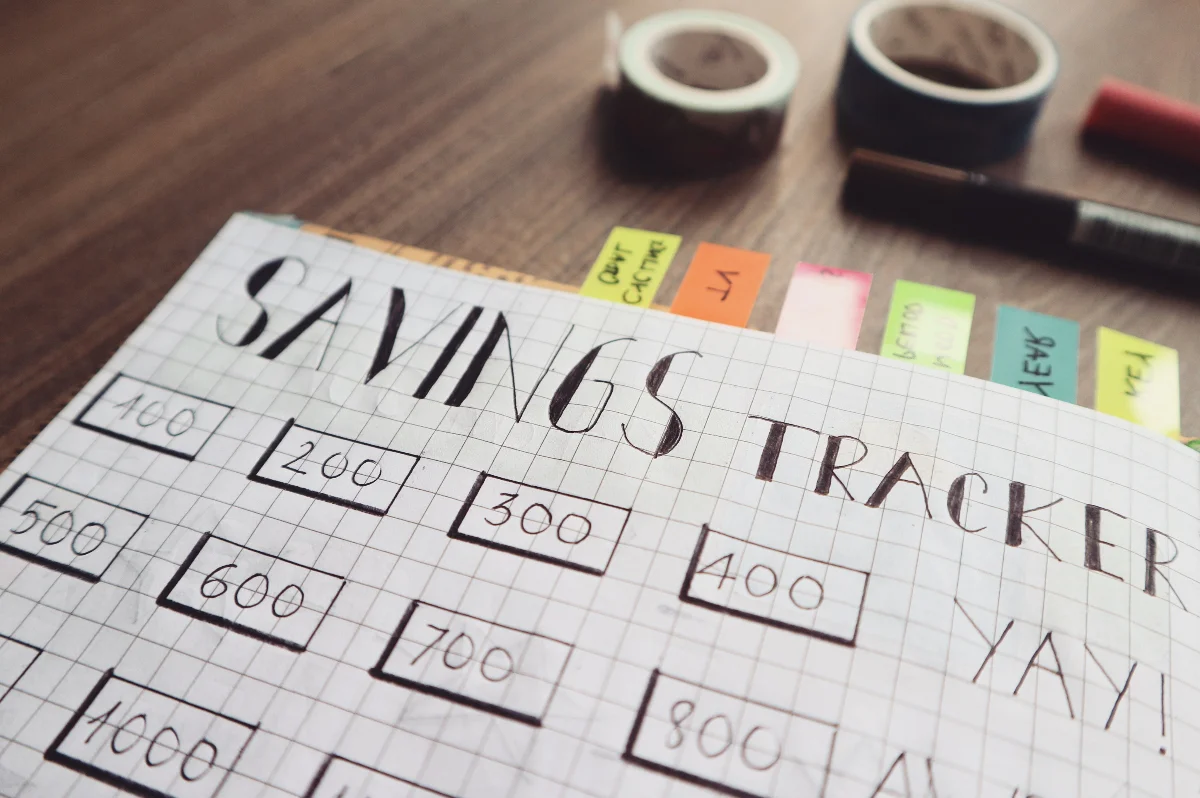

Build your savings plan backwards from your payment dates, making contributions and trade-offs explicit.
What the surveys say
In Zola's 2026 First Look Report, 51% of couples saved for years before getting engaged, 32% are using credit card points, and 17% took on a second or third job.
| What was measured | Average | Source |
|---|---|---|
| Couples who saved for years before getting engaged | 51% | Zola |
| Couples optimizing credit cards for the wedding | 32% | Zola |
| Couples taking a second or third job | 17% | Zola |
| Couples who took out a loan | 4% | Zola |
| Average wedding cost, couples marrying in 2026 | $36,000 | Zola |
Source: Zola 2026 First Look Report (11,500+ couples marrying in 2026). Checked October 2026. An average describes other couples' weddings; the method below works from your own quotes.
The short answer
Start by collecting the exact total you owe and each payment due date from your vendor contracts. Divide that total by the number of pay periods you have before each deadline to determine the amount you need to set aside per paycheck. Then review your current spending to identify which expenses you can reduce or eliminate to free up that cash. If the required contribution is not feasible, adjust your wedding plans—such as extending the timeline or cutting non-essential items—until the numbers work.
CalculatorWedding Savings Planner
The decisions this settles
Build your savings plan backwards from your payment dates, making contributions and trade-offs explicit.
Questions to answer before you commit
- What is the exact total you need to pay and by what dates?
- Which expenses can you reduce or eliminate to free up cash for wedding savings?
- How many pay periods do you have before each payment is due?
- What is the minimum you can set aside each pay period without defaulting on other obligations?
- What trade-offs are you willing to make—such as a longer engagement or a smaller guest list—to meet your savings target?
What each choice changes
| What to compare | What to ask for | The decision it changes |
|---|---|---|
| Savings account type | Minimum balance requirements, withdrawal limits, and any fees for early access. | Whether to use a liquid account or a locked-in option. |
| Payment schedule flexibility | Ask each vendor if they allow partial payments or a payment plan, and what the due dates are. | Whether to save in lump sums or installments. |
| Expense prioritization | List every wedding expense and rank them as non-negotiable, nice-to-have, or optional. | Which costs to cut first when you need to reduce your savings target. |
| Savings timeline | The earliest date you could realistically move the wedding to, and how many additional pay periods that gives you. | Whether to extend your engagement to save more comfortably. |
| Contribution method | Your bank’s minimum automatic transfer amount and any limits on recurring transfers. | Whether to automate contributions or manage them manually. |
| Trade-off analysis | The pricing model of each major category (per person, flat fee, etc.) and how changes affect the total. | Which trade-off (e.g., smaller guest list vs. cheaper venue) yields the biggest savings. |
A worked example you can copy
Working back from the date the money is needed
- Budget target $20,000.00, $8,000.00 already saved, $4,000.00 promised by family.
- Still to save: $8,000.00.
- Finish one month before the wedding, in April 2028: 15 whole months from January 2027.
- So the plan needs $533.34 a month.
- At $1,000.00 a month the target is reached before the finish date.
| Line | Amount |
|---|---|
| Budget target | $20,000.00 |
| Already saved | $8,000.00 |
| Promised contributions | $4,000.00 |
| Still to save | $8,000.00 |
| Months to the finish date | 15 |
| Needed each month | $533.34 |
| Planned each month | $1,000.00 |
| Saved by the finish date at the planned rate | $27,000.00 |
Where this usually goes wrong
None of these are exotic. They are the ordinary ways this decision goes wrong, and each one is caught by asking a single extra question.
Watch for
- Waiting until the last minute to start saving, forcing you to use high-interest credit or borrow from other funds.
- Underestimating the number of deposits required, leaving you short when multiple payments come due at the same time.
- Using a joint account without clear rules, leading to accidental spending of wedding funds on everyday expenses.
Your next conversation, in checklist form
Your next conversation, in checklist form
- Collect quotes and contracts from every vendor to get the exact total you owe and each payment due date.
- List all payment deadlines in chronological order with the corresponding amounts.
- Count the number of pay periods between now and each deadline.
- Open a dedicated savings account for wedding funds only.
- Set up an automatic transfer from your main account to the wedding account on each payday.
- Review your progress monthly and adjust contributions if any expense or timeline changes.
Questions couples ask
Should I use a separate savings account for wedding funds?
Yes, a separate account prevents you from accidentally spending the money on other expenses and makes it easier to track your progress toward each payment deadline.
What if I can't save enough before the first deposit is due?
Contact the vendor immediately to negotiate a later payment date or a payment plan; many vendors are willing to accommodate if you communicate early.
Is it better to save a fixed amount each month or a percentage of income?
A fixed amount tied to your pay schedule is more predictable and easier to automate, ensuring you meet your deadlines regardless of income fluctuations.
What to settle next
Once you have a savings plan, learn how to allocate those funds across your wedding categories and track your spending against your budget.