This page gives you the structure to build a timeline that accounts for every locked time and flexible duration, so your day runs without guesswork.
The short answer
Start by identifying any locked times—like ceremony start or venue curfew—and lock those into your schedule. Then work backward from the ceremony, adding durations for getting ready, travel, portraits, cocktail hour, reception events, and cleanup. Build in a flexible buffer between each major segment so small delays don't derail the whole day.
What this hub decides
Start at the top. Every page here narrows the range for the page underneath it, which is why the order matters more than the reading time.
The decisions this cluster covers
- What are the non-negotiable times set by your ceremony site or reception venue?
- How much time do you and your partner want for portraits between ceremony and reception?
- What is the earliest time vendors can arrive for setup?
- How long do you expect each reception event to take—first dance, toasts, dinner service?
- What time does your venue require all guests to depart?
How the pieces fit together
| What to compare | What to ask for | The decision it changes |
|---|---|---|
| Ceremony start time lock | Ask your ceremony venue for the exact start time and whether there are restrictions on the time of day (e.g., sunset, noise ordinances). | Determines the entire timeline's anchor point and whether you need a morning or afternoon event. |
| Getting ready duration | Ask your hair and makeup artists how much time they need per person and how many people they can serve simultaneously. | Affects when you need to wake up, when vendors arrive, and whether you have time for a first look before the ceremony. |
| Portrait session schedule | Ask your photographer how long each portrait type takes (couple, wedding party, family) and whether they recommend a first look or after-ceremony portraits. | Impacts the gap between ceremony and reception, and whether you need to feed guests during cocktail hour. |
| Reception event order | Ask your caterer, DJ, and venue coordinator about typical flow for dinner service, toasts, first dance, and parent dances. | Controls when you eat, when speeches happen, and whether you have an open dance floor early or late. |

Work through this in order
Work through this in order
- Confirm your ceremony start time and any time-of-day restrictions with your officiant or venue.
- List every activity from getting ready to send-off and assign a realistic duration to each.
- Identify at least two locked times (e.g., ceremony start, venue departure) and build the timeline around them.
- Add a buffer between each major segment equal to the length of the shortest segment in that block.
- Share the final timeline with your wedding party, vendors, and day-of coordinator a week before the wedding.
- Print a physical copy of the timeline for your main contact on the day and a backup for yourself.

A worked example you can copy
Placing the day around one locked ceremony time
- 9:00 AM – 12:00 PM Hair and makeup (locked)
- 12:30 PM – 1:30 PM Getting ready photos
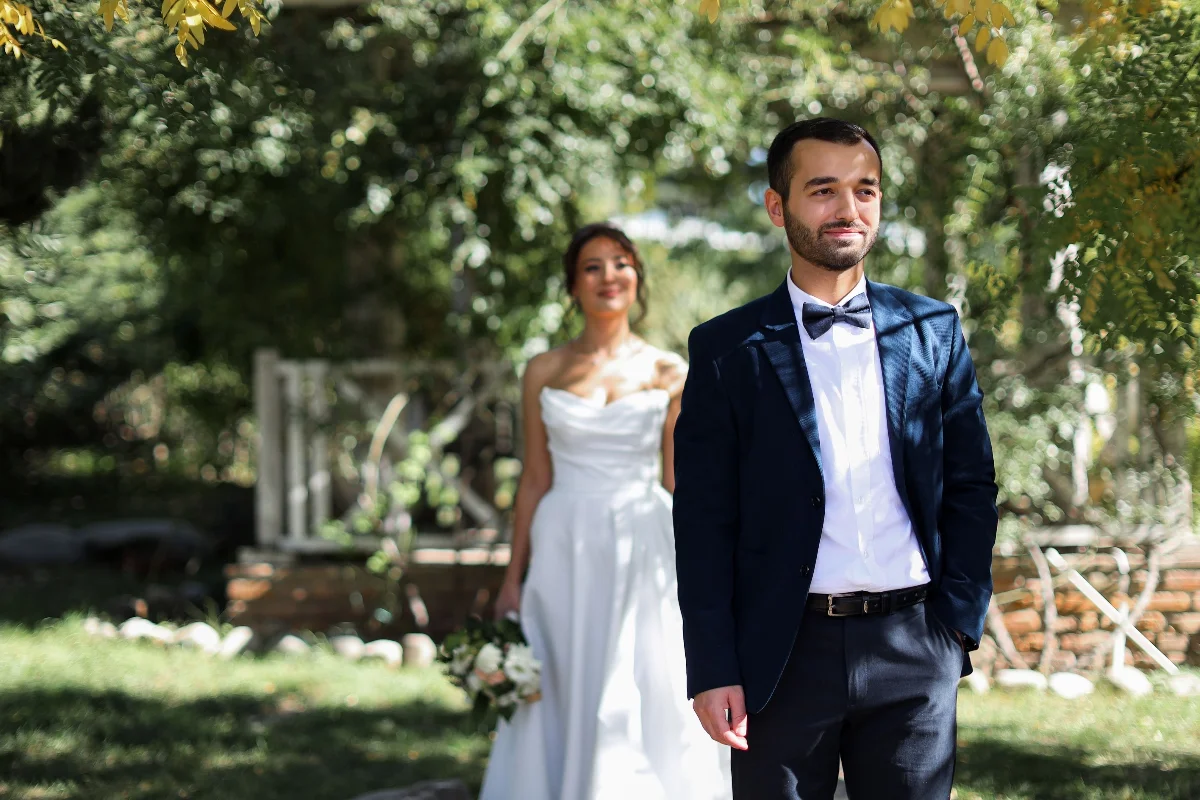
- 1:30 PM – 2:45 PM First look and portraits
- 3:30 PM – 4:15 PM Ceremony (locked)
- 4:15 PM – 5:15 PM Cocktail hour
- 5:15 PM – 7:15 PM Dinner and speeches
- 7:15 PM – 9:15 PM Dancing
- 9:15 PM – 9:30 PM Exit
- No conflicts: every activity still fits in front of the locked ceremony time.
| Line | Amount |
|---|---|
| Minutes inside a named activity | 675 min |
| Minutes from first start to last end | 750 min |
Where this usually goes wrong
None of these are exotic. They are the ordinary ways this decision goes wrong, and each one is caught by asking a single extra question.
Watch for
- Assuming every segment will run exactly its planned duration without room for error.
- Forgetting to account for travel time between ceremony and reception locations.
- Scheduling portrait time so tightly that you miss the best natural light or feel rushed for key photos.
Questions couples ask
How do I handle a gap in my timeline?
A gap can be filled with cocktail hour, a surprise activity, or simply extra portrait time. But if the gap is too long, guests may become restless or leave; aim to keep transitions smooth.
How do I know how much buffer time to add?
Add a buffer equal to roughly the shortest activity in that block. For example, if you have a 15-minute first look, add 15 minutes of buffer before the next activity.
What if my ceremony and reception are at the same venue?
You still need to schedule a transition—time for the room flip, guest movement, and vendor setup. That transition should be added as a separate locked block in your timeline.
Your next decision
Once you have a draft timeline, move to the ceremony and reception pages to lock in the details for each segment.