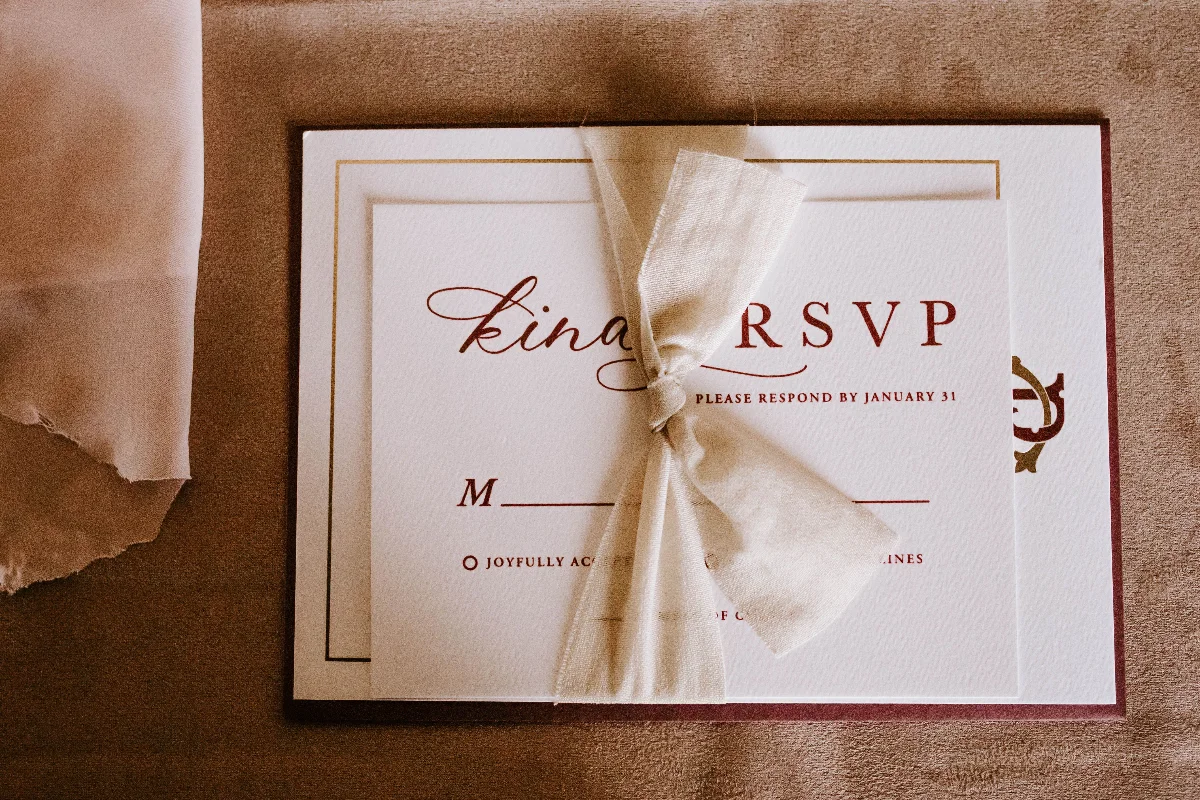
This page helps you set an RSVP deadline that gives you enough time to chase late responses without missing your caterer's final head count.
The short answer
Your RSVP due date should be set by counting backward from your caterer's final head-count deadline. First, ask your caterer or venue for the exact date they need your final numbers. Then subtract enough days to allow for follow-up calls to guests who haven't responded. This method ensures you have a complete count without paying for no-shows or scrambling for extra seats.
The decisions this settles
This page helps you set an RSVP deadline that gives you enough time to chase late responses without missing your caterer's final head count.
Questions to answer before you commit
- What is the exact date your caterer or venue requires your final guest count?
- How many days will you realistically need to contact non-responders after the deadline?
- Will you include a grace period for mailed responses before you start follow-ups?
- Does your invitation timeline allow enough time for printing, addressing, and mailing before the RSVP deadline?
- Have you considered whether your RSVP method (online vs. mail) affects how much buffer time you need?
What each choice changes
| What to compare | What to ask for | The decision it changes |
|---|---|---|
| Caterer's final count deadline vs. venue's final count deadline | Ask each vendor for the exact date they need your final numbers in writing. | Which deadline is earlier determines your RSVP due date. |
| Online RSVP response time vs. mail response time | Ask your stationer for estimated delivery time for mailed responses and test your online form. | Whether you need a longer or shorter buffer for follow-ups. |
| Number of out-of-town guests vs. local guests | Ask your guest list for which guests may need extra time to respond due to travel. | Whether to set an earlier deadline for distant guests. |
| Your follow-up capacity vs. guest list size | Ask yourself how many guests you can contact per day during the follow-up period. | How many buffer days you need between RSVP deadline and final count deadline. |
| Invitation mailing date vs. RSVP deadline | Ask your stationer for the confirmed mailing date and compare it to your deadline. | Whether the RSVP window is long enough for guests to respond. |

A worked example you can copy
Working back from the date the caterer needs a number
- Wedding date: July 12, 2027.
- The caterer needs the final count on June 12, 2027. That date comes from the contract, not from etiquette.
- Keep 14 days to chase the people who have not replied.
- So the RSVP deadline is May 29, 2027, and follow-up starts May 30, 2027.
- To give guests the time you allowed, invitations go in the mail by April 3, 2027.
| Line | Amount |
|---|---|
| Days between the deadline and the final count | 14 days |
| Days between the deadline and the wedding | 44 days |

Where this usually goes wrong
Each of these is cheap to avoid now and expensive to fix later. They are the mistakes that surface in the final invoice.
Watch for
- Setting the RSVP deadline too close to the caterer's deadline leaves no time to chase late responses, forcing you to guess numbers.
- Using only one RSVP method without a backup plan can delay responses if mail is slow or online forms have technical issues.
- Forgetting to account for holidays or peak mailing seasons can cause guests to receive invitations late, shrinking their response window.
Your next conversation, in checklist form
Your next conversation, in checklist form
- Confirm your caterer's final head-count deadline in writing.
- Count backward from that deadline to set your RSVP due date.
- Add a buffer of several days for follow-up calls to non-responders.
- Include the RSVP deadline clearly on your invitation and wedding website.
- Prepare a tracking spreadsheet to monitor responses as they arrive.
- Schedule a follow-up date to start contacting guests who haven't replied.
Questions couples ask
What if my caterer doesn't give a final count deadline?
Ask your venue or rental company for their deadline instead, as they often need numbers for seating and setup. If no vendor provides a date, set your RSVP deadline at least two weeks before the wedding to allow for follow-ups.
Should I set different deadlines for local and out-of-town guests?
No, use one deadline for all guests to simplify tracking and avoid confusion. Instead, mail invitations to out-of-town guests earlier so they have the same response window.
How do I handle guests who RSVP after the deadline?
Call them immediately to get their answer, but do not count them until you confirm. If they are late, you may need to adjust your final count with the caterer if possible.
Your next decision
Now that you have your RSVP deadline, learn how to track responses and follow up with late guests.