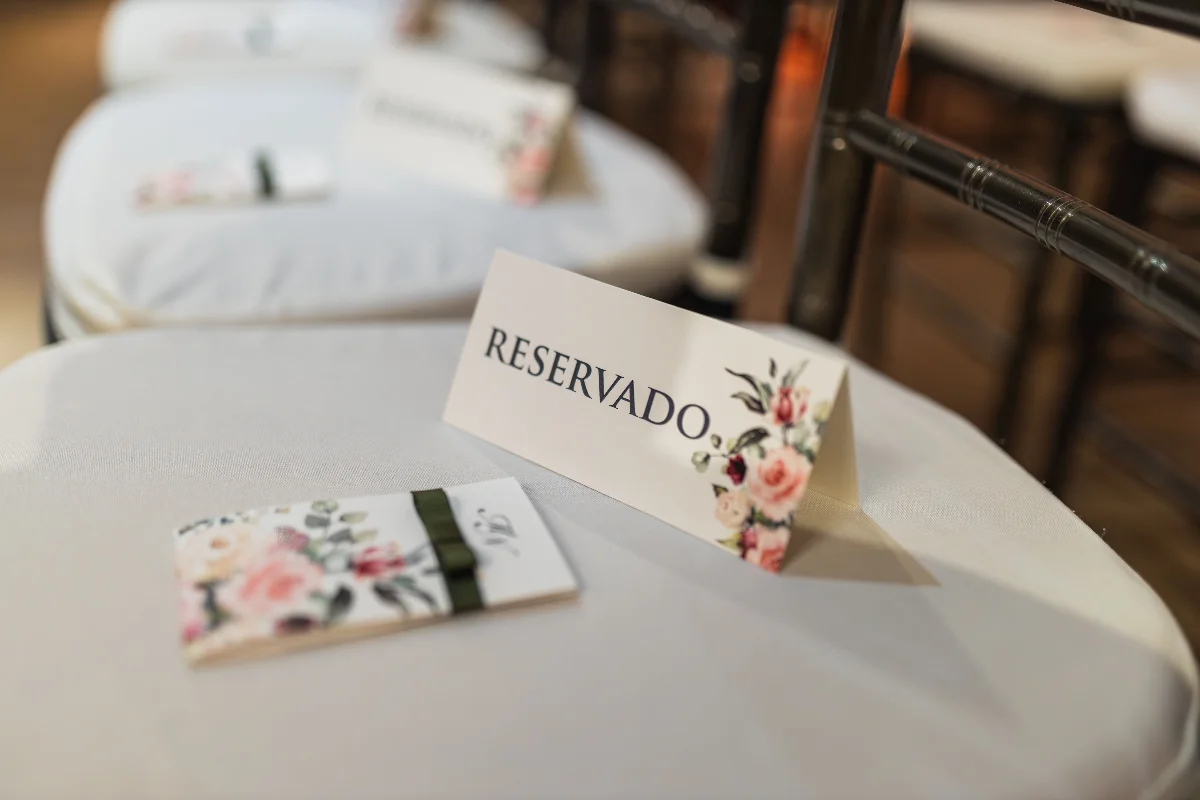

This page turns seating-chart dread into a step-by-step constraint-based system, so you can place every guest without the guesswork or family friction.
The short answer
Start by listing every guest and their relationship to you, your partner, and each other, then group them by shared table preferences or needs. Next, assign tables based on hard constraints—like dietary restrictions, accessibility, and plus-ones—before worrying about exact seat order. Finally, use place cards to handle the last-minute changes, so your chart stays flexible until the day before.
The decisions this settles
This page turns seating-chart dread into a step-by-step constraint-based system, so you can place every guest without the guesswork or family friction.
Questions to answer before you commit
- Which guests absolutely cannot sit near each other, and have you noted this on your master list?
- What are the non-negotiable seating needs—wheelchair access, high chairs, or hearing assistance—and which tables meet them?
- How many guests are part of a couple or family unit that must be seated together, and have you grouped them as one unit?
- Which guests know each other well enough to enjoy sitting together, and which would prefer to be with strangers?
- What is your backup plan for a guest who cancels or adds a plus-one after the chart is printed?
What each choice changes
| What to compare | What to ask for | The decision it changes |
|---|---|---|
| Table shape and size | Ask for the exact dimensions of each table and how many guests it can hold comfortably. | Determines how many guests you can seat per table and whether round, rectangular, or long tables work for your space. |
| Seating chart display format | Compare a physical chart, escort cards, and a digital display—ask what each costs and how late changes are handled. | Affects your ability to make last-minute updates and the overall look you want at the reception entrance. |
| Guest list priority tiers | List which guests are must-invite, should-invite, and could-invite, and note any that need special seating. | Helps you decide who gets the best tables and how to handle plus-ones or children. |
| Meal choice tracking | Ask how meal selections are collected and whether the venue or caterer provides a final count by table. | Determines if you need separate place cards for each meal option or if you can use a color-coded system. |
| Accessibility and flow | Walk the room and note aisle widths, exit paths, and where service staff will move during dinner. | Affects which tables can be placed near high-traffic areas and whether any guests need extra space. |

A worked example you can copy
What cutting the guest list is actually worth
- Variable spend at 120 guests: $12,440.00.
- Variable spend at 105 guests: $12,260.00.
- Difference: $180.00 for 15 fewer guests.
- Per guest removed: $12.00, not the $97.00 headline per-guest rate.
- The food-and-beverage minimum is reached at 130 guests; below that the catering line stops falling.
| Line | Amount |
|---|---|
| Variable spend at 120 guests | $12,440.00 |
| Variable spend at 105 guests | $12,260.00 |
| Saving | $180.00 |
| Saving per guest removed | $12.00 |
| Headline per-guest rate | $97.00 |
| Shortfall against the minimum | $2,075.00 |

Where this usually goes wrong
These are the failure modes that cost real money or real time. Each one is avoidable if you catch it before you sign.
Watch for
- Waiting until the last minute to finalize the chart, which leaves no time to fix conflicts or accommodate changes.
- Forgetting to account for guests who need extra space, like wheelchair users or those with service animals, which can force a last-minute reshuffle.
- Assuming all plus-ones are comfortable with strangers, so you seat them with people they don't know—ask your guests if they have a preference.
Your next conversation, in checklist form
Your next conversation, in checklist form
- Create a master guest list with columns for name, household, dietary needs, accessibility, and relationship to you and your partner.
- Mark every guest who must sit with a specific person or group, and flag any conflicts between guests.
- Group guests into natural clusters—like college friends, family, or coworkers—before assigning tables.
- Assign tables based on hard constraints first, such as dietary restrictions, accessibility, and plus-ones.
- Draft a table-by-table list and check it against your venue's floor plan for capacity and flow.
- Print a draft chart and review it with your partner and a trusted friend to catch any missed conflicts or groupings.
Questions couples ask
How far in advance should I finalize my seating chart?
Finalize your chart after your RSVP deadline and after you have your final guest count from your venue. Leave a few days before the wedding to handle any last-minute changes.
Should I assign specific seats or just tables?
Assigning specific seats is more work but gives you control over who sits next to whom, which can prevent awkward moments. If you prefer less stress, assign tables and let guests choose their own seats within that table.
How do I handle guests who RSVP late or cancel at the last minute?
Keep a few blank place cards and a small table chart at the entrance so you can make quick changes. Have a backup plan for a few extra seats at a table with friends who are flexible.
Your next decision
Once your seating chart is set, move on to planning your table centerpieces and place settings to match your layout.