This page shows how your specific reception timeline, guest drinking pace, and drink preferences drive the bottle count—no generic formulas.
The short answer
Start by estimating the number of drinks your guests will have per hour of your reception. Multiply that by the number of drinking guests and the total hours the bar will be open. Then split that total across beer, wine, and cocktails based on what you know about your crowd. Finally, add a buffer for spillage and unexpected demand, and confirm your venue's alcohol policies before purchasing.
CalculatorWedding Bar & Alcohol Calculator
The decisions this settles
This page shows how your specific reception timeline, guest drinking pace, and drink preferences drive the bottle count—no generic formulas.
Questions to answer before you commit
- How many hours will the bar be open during your reception?
- What is the drinking profile of your guest list in terms of pace and preference?
- Will you serve a full open bar, or limit to beer and wine only?
- How will you handle leftovers—can you return unopened bottles to the retailer?
- How many guests are likely to drink non-alcoholic beverages exclusively?
What each choice changes
| What to compare | What to ask for | The decision it changes |
|---|---|---|
| Guest drinking pace | Estimate of how many drinks each guest will have per hour of the reception | Total number of alcoholic beverages you need to purchase |
| Bar open duration | Length of time the bar will actively serve alcohol from start to close | Number of drinks needed per guest over the event |
| Drink type preference | Whether your guests primarily prefer beer, wine, or cocktails | The breakdown of alcoholic beverages to order (cases vs. bottles) |
| Serving sizes | Standard pour sizes your venue or bartender will use for wine and liquor | Number of servings per bottle, therefore bottle count |
| Non-drinker count and buffer | Number of guests who will not drink alcohol plus a margin for spillage or refills | Amount of non-alcoholic beverages and the final alcoholic quantity |
A worked example you can copy
Turning a guest count and bar hours into bottles
- 110 drinking guests and a bar open for 5 hours.
- Two drinks each in the first hour and one an hour after that is 6 drinks per guest: 660 drinks.
- Add a 10% buffer: 726 drinks.
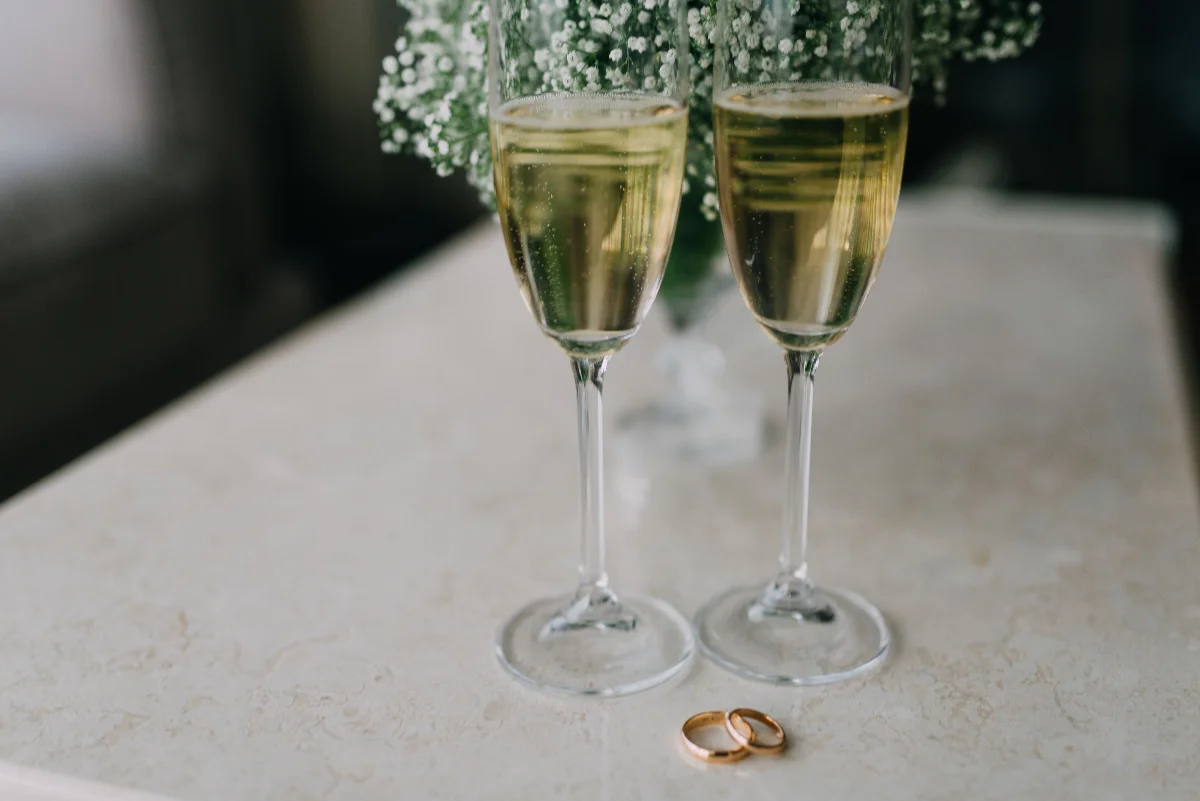
- Split 60% wine, 40% beer, 0% liquor and round each up to whole bottles: 88 bottles (750 ml) of wine, 291 cans or bottles of beer, 14 bottles (750 ml) of champagne toast.
- At the example prices that is $1,744.50 before mixers, ice and any bartender or corkage fee.
| Line | Amount |
|---|---|
| Drinks planned | 726 |
| Wine (bottles (750 ml)) | 88 |
| Beer (cans or bottles) | 291 |
| Champagne toast (bottles (750 ml)) | 14 |
| Bar cost at example prices | $1,744.50 |
Where this usually goes wrong
These are the failure modes that cost real money or real time. Each one is avoidable if you catch it before you sign.
Watch for
- Assuming every guest drinks at the same pace—your crowd will have light and heavy drinkers
- Forgetting to account for the time after dinner when drinking may slow or stop entirely
- Not verifying return policies with your alcohol retailer before you purchase
Your next conversation, in checklist form
Your next conversation, in checklist form
- Determine your reception timeline and the exact hours the bar will be open
- Estimate the average consumption per guest per hour based on your crowd
- Decide on a ratio of beer, wine, and cocktails that matches your guests' preferences
- Calculate base quantities using your chosen method from this page
- Add a buffer to account for spillage, heavy drinkers, and unexpected guests
- Check retailer return policies and venue rules about alcohol service before buying
Questions couples ask
How do I estimate how much my guests will drink?
Your estimate should consider your guest list's drinking habits and the duration of your reception. Speak with your venue or bar service provider for guidance based on events they have hosted.
Should I buy beer, wine, or liquor?
The decision depends on your crowd's preferences and the formality of your event. A conversation with your caterer or bartender can help you decide what to serve.
What do I do with leftover alcohol after the wedding?
Check with the retailer where you made your purchase to see if they accept returns of unopened bottles. If not, you can save them for future gatherings or offer them to guests as favors.
Your next decision
Once your quantities are set, move on to our pages on hiring a bartender and setting up a self-serve bar to finalize your service plan.