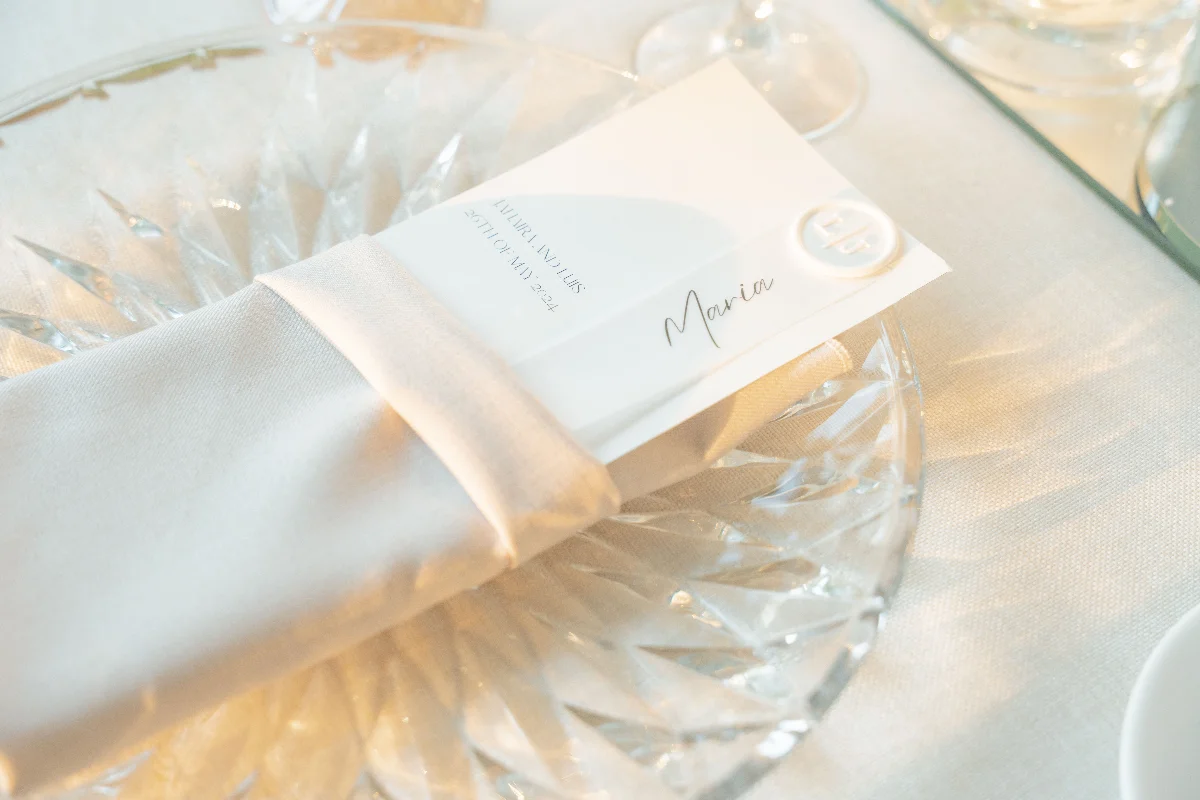
Make confident decisions about invitation wording, guest list boundaries, and addressing conventions so your invitations feel gracious and clear.
The short answer
Start by defining your guest list policies for plus-ones and children before you order invitations. Then choose a consistent addressing style that reflects the formality of your event. Finally, write and proofread your wording for each category of guest to prevent unintentional omissions or confusion.
The decisions this settles
Make confident decisions about invitation wording, guest list boundaries, and addressing conventions so your invitations feel gracious and clear.
Questions to answer before you commit
- Will you give every single adult guest a plus-one, or limit plus-ones to those in committed relationships?
- Will you invite children or make your wedding adults-only, and how will you communicate that?
- How will you address invitations to unmarried couples who live together versus those who don't?
- Will you use inner and outer envelopes, and if so, which names go on each?
- What RSVP deadline will you set, and will you use a mailed response card, online RSVP, or both?
What each choice changes
| What to compare | What to ask for | The decision it changes |
|---|---|---|
| Plus-one policy | Number of invited guests vs. venue capacity; relationship status of each single guest | Whether to allow plus-ones for all singles or only for those in long-term relationships |
| Children policy | Venue age restrictions; per-head budget; family expectations | Whether to invite children or host an adults-only wedding |
| Addressing style | Use of formal titles (Mr., Mrs., Ms., Dr.) versus first names; punctuation and abbreviation choices | The perceived formality of your invitation and how guests judge the event's tone |
| Household vs. individual invitations | Whether guests share a last name; whether they live together; their relationship status | Whether to send one invitation per couple or family versus separate invitations |
| Inner vs. outer envelope wording | Guest names to include on inner envelope; whether to list children's names or just 'and Family' | Which guests are formally invited and whether children or plus-ones are implied |
| RSVP deadline and method | Lead time needed for final catering and seating counts; whether to use paper or online responses | When you receive final headcounts and how you manage late or missing replies |

A worked example you can copy
Turning a guest list into a mailing count
- 55 households or couples invited together receive one invitation each.
- 6 people need their own mailing: adult children at other addresses, colleagues, single friends invited alone.
- That is 61 invitations to send.
- Add 7 spares for addressing mistakes, keepsakes and late additions.
- Order 68. Note that this is a mailing count, not a guest count.
| Line | Amount |
|---|---|
| Households | 55 |
| Separate mailings | 6 |
| Base invitations | 61 |
| Spares | 7 |
| Order quantity | 68 |

Where this usually goes wrong
These are the failure modes that cost real money or real time. Each one is avoidable if you catch it before you sign.
Watch for
- Mailing invitations without a confirmed plus-one policy, leading to awkward guest list expansions and reprinting costs.
- Addressing envelopes with ambiguous wording like 'and Guest' when you intended a specific person, causing confusion and wasted postage.
- Forgetting to include a return address on response envelopes, resulting in lost RSVPs and time wasted following up.
Your next conversation, in checklist form
Your next conversation, in checklist form
- Decide your plus-one policy for each single guest before writing any addresses.
- Set an adults-only policy or list each child by name on the inner envelope.
- Choose a consistent addressing format (e.g., Mr. and Mrs. John Smith) for married couples.
- Write a clear RSVP deadline that gives you enough time to finalize vendor counts.
- Include a line on the response card for dietary restrictions if your caterer needs it.
- Proofread every invitation aloud to catch misspellings and awkward phrasing.
Questions couples ask
Do I have to invite children even if I don't want them?
No, you can make your wedding adults-only. Simply address the invitation to the adults only and omit children's names; if parents ask, politely explain your capacity or budget constraints.
Can I give a plus-one to only some single guests?
Yes, it is acceptable to give plus-ones to guests in serious relationships while leaving other singles without a plus-one. Be consistent based on relationship status rather than personal preferences to avoid hurt feelings.
How do I address an invitation to a same-sex couple?
Use the same etiquette as for opposite-sex couples: if they share a last name, use 'Mr. and Mr. John and James Smith' or 'Ms. Jane and Ms. Amy Doe.' If they have different last names, list each name on its own line or side by side.
Your next decision
Once you have settled on your invitation wording and addressing, the next step is to choose a printing method and assembly sequence that fits your budget and timeline.