Understand exactly who bears each cost and how your choice of bar format determines the quantity you plan for, not just the price.
The short answer
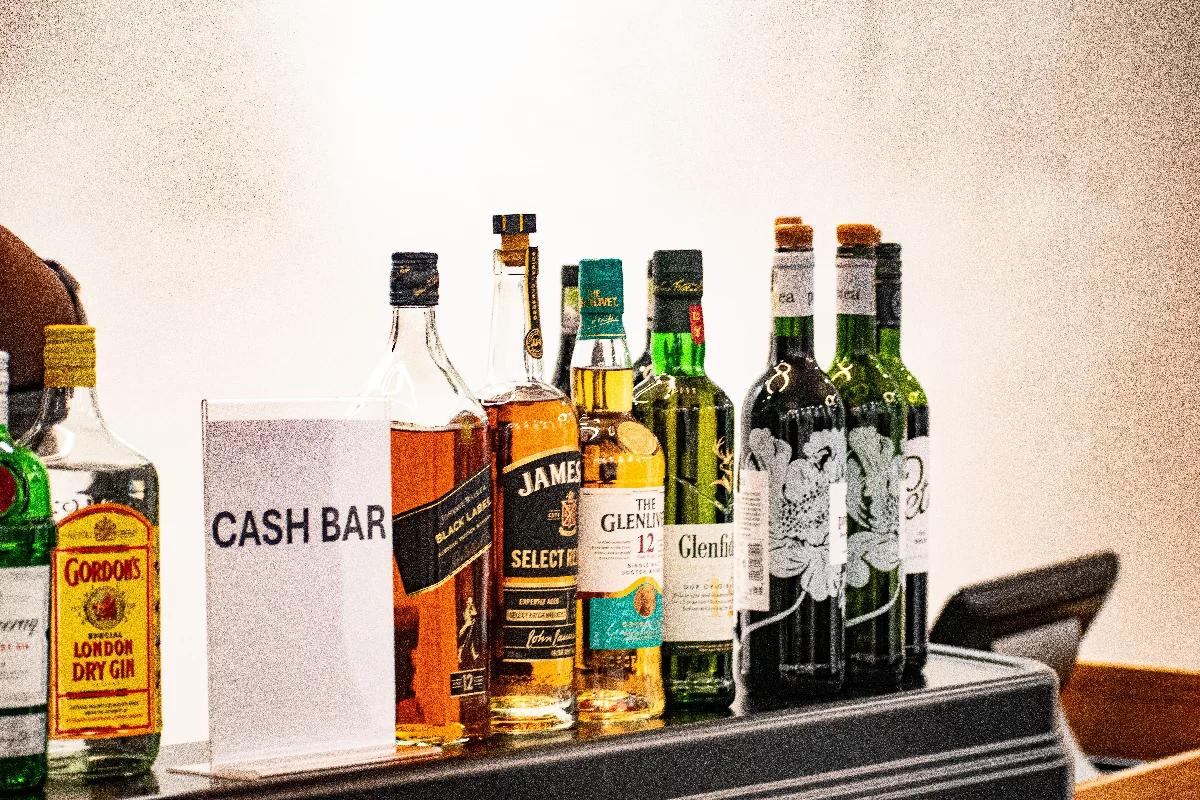
An open bar means the couple pays for all drinks, a cash bar means guests pay individually, and a limited bar (or hosted bar) means the couple covers selected categories such as beer and wine. The real decision is about controlling guest experience versus managing a fixed cost, and each format asks you to decide who bears the risk of high consumption. Your choice directly shapes how many bartenders you need, what inventory to order, and whether bar tabs are even relevant.
CalculatorWedding Bar & Alcohol Calculator
The criteria that decide it
| What to compare | What to ask for | The decision it changes |
|---|---|---|
| Who pays for each drink | In your contract, confirm whether the per-drink charge applies to the couple, the guests, or a combination, and if there is a minimum consumption guarantee. | Determines whether your budget is fixed or variable and whether guests need cash or cards. |
| Drink selection control | Review the list of brands, house wines, and signature recipes offered under each bar type; ask if premium upgrades are available and at what terms. | Dictates the level of personalization and the risk of guests being disappointed with limited options. |
| Quantity planning method | Request the venue's or caterer's formula for estimating drink counts per person per hour under each bar format; do not rely on generic rules. | Affects how much inventory you order, how many bartenders you schedule, and whether you might run out or over-order. |
| Service timing and staffing | Ask if open bar, cash bar, or limited bar requires different staff ratios; check if cash bar slows service due to payment processing. | Impacts guest wait times and the number of bar stations needed, which in turn affects floor plan and hiring. |
| Contractual flexibility | Look for clauses about changing the bar format after signing, minimum spend commitments, and corkage or service fees. | Determines whether you can switch from cash to limited bar if your guest count drops or if the final bill is non-negotiable. |
| Cleanup and deposit return | Ask how leftover open bottles are handled under each format, whether the venue charges a restocking fee, and what triggers a deposit deduction. | Influences your final cost and whether you can take remaining wine or spirits home. |
Which option fits your situation
Both choices work for somebody. Decide which of your constraints is least negotiable and the answer usually falls out of that.
Decide these first
- Will you assume full financial responsibility for every drink a guest orders, or will you set a cap per person or per category?
- If you offer a limited bar, which categories (beer, wine, spirits, signature cocktails) are included and which are excluded?
- How will you communicate the bar format to guests before and during the event without causing confusion or offense?
- What is your plan for handling guests who exceed the allotted consumption under a limited bar – will you cut them off or switch to cash?
- Do you have a contractual clause that allows you to change the bar format after reviewing final guest count without penalty?

A worked open bar vs cash bar example
Turning a guest count and bar hours into bottles
- 90 drinking guests and a bar open for 5 hours.
- Two drinks each in the first hour and one an hour after that is 6 drinks per guest: 540 drinks.
- Add a 10% buffer: 594 drinks.
- Split 60% wine, 40% beer, 0% liquor and round each up to whole bottles: 72 bottles (750 ml) of wine, 238 cans or bottles of beer.
- At the example prices that is $1,221.00 before mixers, ice and any bartender or corkage fee.
| Line | Amount |
|---|---|
| Drinks planned | 594 |
| Wine (bottles (750 ml)) | 72 |
| Beer (cans or bottles) | 238 |
| Bar cost at example prices | $1,221.00 |
Mistakes to avoid with open bar vs cash bar
Each of these is cheap to avoid now and expensive to fix later. They are the mistakes that surface in the final invoice.
Watch for
- Assuming that an open bar always means less guest spending, then learning the couple gets billed for every pour, including unused inventory.
- Choosing a cash bar without confirming that the venue has an ATM on site and that guests are aware, leading to long lines and awkward moments.
- Underestimating the time needed to train bar staff on a limited bar policy, such as cutting off guests after a set number of drinks, which can cause service confusion.
Your next conversation, in checklist form
Your next conversation, in checklist form
- Request a written breakdown from each vendor of exactly what is included and excluded under open, cash, and limited bar options.
- Count the number of guests who actually will drink and for how many hours, then use that to plan bar capacity.
- Decide whether to offer a cocktail hour with one format and then switch formats for the reception.
- Prepare a script or signage that clearly states the bar rules so guests know what to expect.
- Ask your venue or caterer how bartenders handle tip policies under each format.
- Set a firm decision deadline before the final headcount is due to the venue.
Open bar vs cash bar: common questions
Can we start with an open bar for the cocktail hour and switch to cash bar for the reception?
Yes, many venues allow a hybrid timeline, but you must confirm it in writing and ensure the transition is clearly communicated to guests. A sudden switch can feel awkward, so use a bar sign or announcement at the right moment.
What happens to partially consumed bottles at the end of the night under an open bar?
This depends on your contract: some venues allow you to take home opened wine and spirits, while others charge a corkage fee or require you to leave everything. Always clarify this before signing to avoid a surprise bill.
Do we need a bartender with a special license for a cash bar?
Some states require a separate alcohol service license for any transaction involving money changing hands for drinks. Check with your venue or local alcohol control board to ensure compliance.
Where to go next
Once you decide on a bar format, move on to comparing bartender packages, corkage policies, and your beverage timeline to match your service style.