Learn whether a champagne toast is a must-have tradition or an add-on you can skip, and how to plan the pour without waste.
The short answer
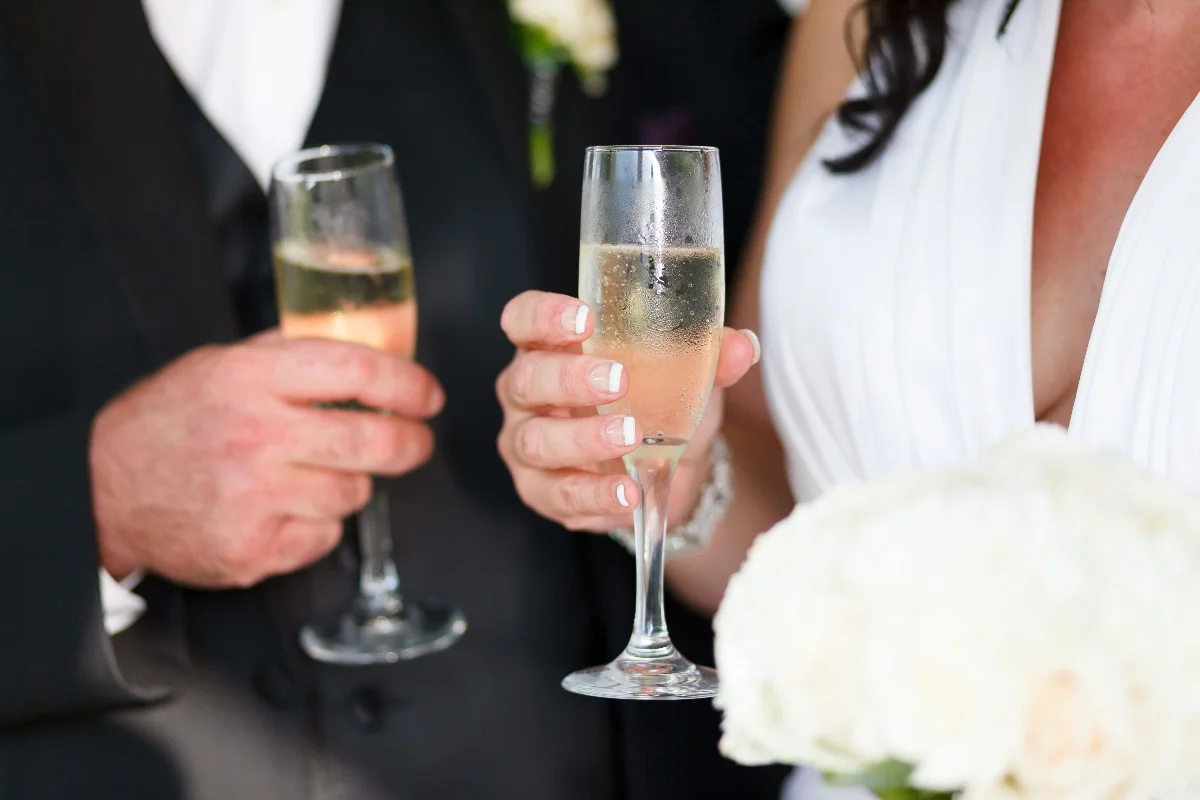
You do not need a separate champagne toast; you can ask guests to raise whatever beverage they already have. If you prefer a dedicated toast drink, factor in that each guest will likely need one pour, and you can offer non-alcoholic sparkling cider as an alternative. The key is to decide based on your budget and the formality of your reception.
CalculatorWedding Bar & Alcohol Calculator
The criteria that decide it
| What to compare | What to ask for | The decision it changes |
|---|---|---|
| Separate toast glass vs. toast with existing drink | Ask your caterer or bar manager whether they include a toast pour in the bar package or charge extra. Compare the logistics of distributing a second glass versus asking guests to hold onto one for a toast. | Choosing a separate toast adds cost and glassware but creates a classic photo moment; toasting with what is in hand saves money and waste. |
| Sparkling wine vs. non-alcoholic cider | Request a tasting of the sparkling wine the venue proposes, and compare with a non-alcoholic option they can provide. Check if the cider is available in a similar pour volume and glass. | Selecting non-alcoholic cider ensures all guests can participate without pressure, but may change the visual of the toast (color, bubbles). |
| Included in bar package vs. à la carte | Review your contract: does the bar package include a champagne toast pour, or is it listed as an add-on with a per-glass charge? Ask about minimum quantities and breakage policies. | An included pour simplifies planning and cost; an à la carte charge lets you control exactly how many glasses you provide but adds a line item. |
| Guest participation vs. only for the wedding party | Decide whether every guest will receive a toast beverage or only the wedding party and speakers. Clarify with the venue how they will handle distribution if it is not for all. | If only the wedding party toasts, you eliminate per‑glass costs for the full guest list but may leave other guests feeling left out of the moment. |
| Glassware rental vs. venue’s glassware | Ask whether the venue provides glassware for a toast beverage or if you need to rent additional flutes. Confirm whether their glassware matches the style of your dinnerware. | If you must rent glassware, add that cost and logistics; venue‑provided glassware simplifies setup but may not match your aesthetic. |
Which option fits your situation
Both choices work for somebody. Decide which of your constraints is least negotiable and the answer usually falls out of that.
Decide these first
- Is the champagne toast important to you as a symbolic moment, or are you open to alternatives?
- Will you provide a separate glass of sparkling wine for each guest, or let them toast with their current drink?
- If you do a dedicated toast, would you offer both alcoholic and non-alcoholic options?
- How formal is your reception style, and does a champagne toast fit the vibe?
- How many guests are you serving, and does your venue allow for distributing a second glass?
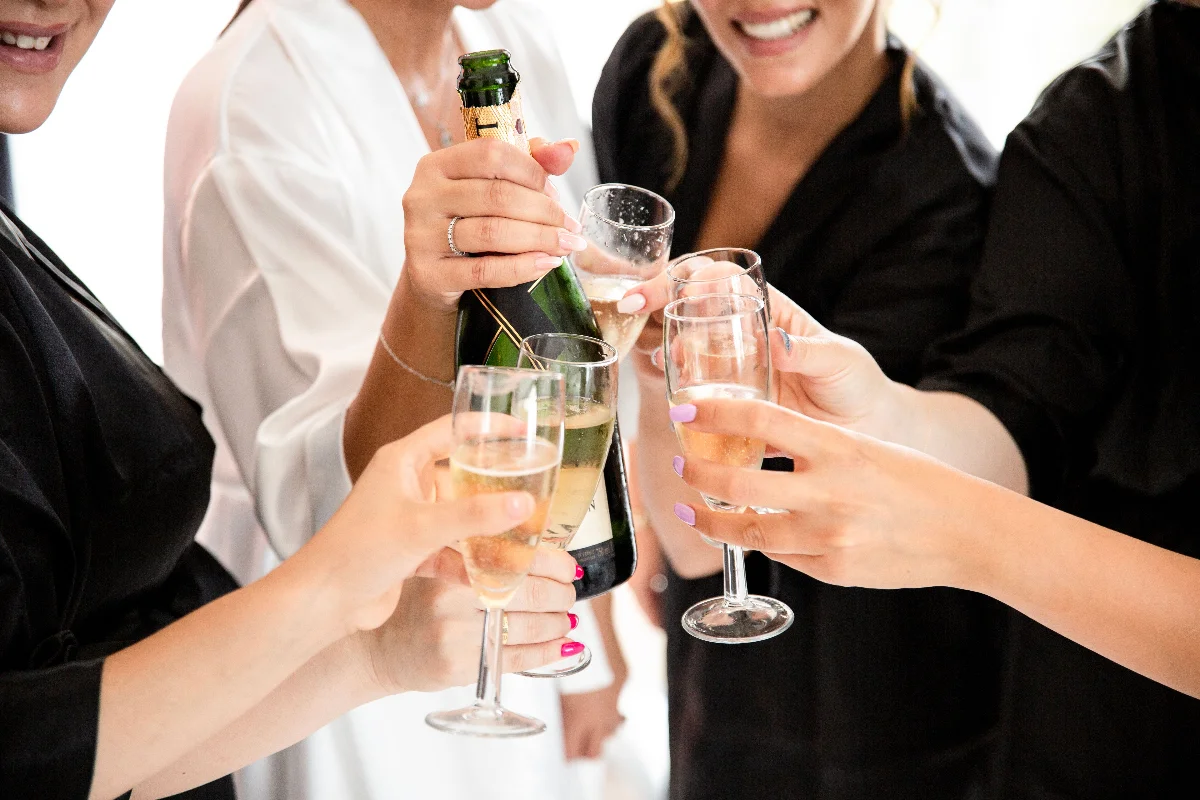
A worked wedding champagne toast example
Turning a guest count and bar hours into bottles
- 110 drinking guests and a bar open for 4 hours.
- Two drinks each in the first hour and one an hour after that is 5 drinks per guest: 550 drinks.
- Add a 10% buffer: 605 drinks.
- Split 50% wine, 30% beer, 20% liquor and round each up to whole bottles: 61 bottles (750 ml) of wine, 182 cans or bottles of beer, 8 bottles (750 ml) of liquor, 14 bottles (750 ml) of champagne toast.
- At the example prices that is $1,666.00 before mixers, ice and any bartender or corkage fee.
| Line | Amount |
|---|---|
| Drinks planned | 605 |
| Wine (bottles (750 ml)) | 61 |
| Beer (cans or bottles) | 182 |
| Liquor (bottles (750 ml)) | 8 |
| Champagne toast (bottles (750 ml)) | 14 |
| Bar cost at example prices | $1,666.00 |
Mistakes to avoid with wedding champagne toast
Each of these is cheap to avoid now and expensive to fix later. They are the mistakes that surface in the final invoice.
Watch for
- Ordering too much sparkling wine for a toast, then having leftover cases you cannot return.
- Assuming all guests will drink alcohol during the toast, leaving no alternative for non‑drinkers or designated drivers.
- Forgetting to arrange glassware if the toast beverage is different from what guests are currently holding.
Your next conversation, in checklist form
Your next conversation, in checklist form
- Decide whether the toast is a priority or an optional add-on.
- Confirm with your venue or caterer whether they provide, pour, and serve a toast beverage.
- Estimate the number of guests who will actually participate (exclude children and non-guest speakers).
- If pouring a separate toast, order beverage based on your guest count, allowing for one serving per person.
- Ask for a sample of the sparkling wine or cider they plan to use to ensure quality.
- Coordinate with the DJ or band to cue the toast at the right moment in the timeline.
Wedding champagne toast: common questions
Can we have a champagne toast without champagne?
Yes, you can use any sparkling wine, cider, or even non‑alcoholic options. Many venues will allow a toast with whatever the guest is already drinking.
How do we ensure the toast is not rushed or missed?
Work with your emcee to schedule the toast during a natural pause, such as after dinner and before dancing. Remind the bar and waitstaff to have glasses distributed before the toast time.
Do we need to provide a toast for children and non‑drinkers?
It is thoughtful to offer a non‑alcoholic sparkling cider or juice for those who do not drink alcohol. Check with your caterer if they can provide a separate bucket of that.
Where to go next
Once you have decided on the toast format, explore our guide to bar packages and signature drinks to complete your beverage plan.