The recessional is your first chance to shape the energy of the cocktail hour, so the order you choose controls how guests transition from ceremony to celebration.
The short answer
The recessional order starts with the newly married couple leading the way out, followed by the wedding party in reverse of the processional. After the wedding party, the parents and grandparents exit, and finally the guests are dismissed row by row from front to back. The specific sequence you choose depends on whether you want a formal, traditional exit or a more relaxed, celebratory flow. Your officiant will cue each group, so give them a written order card to avoid confusion.
The decisions this settles
The recessional is your first chance to shape the energy of the cocktail hour, so the order you choose controls how guests transition from ceremony to celebration.
Questions to answer before you commit
- Do you want the wedding party to exit in pairs or individually, and does that change based on whether they are paired by gender or by relationship?
- Will your parents exit with the wedding party, or do you prefer they wait and exit with other family members after the party has cleared?
- How will you signal guests to leave their seats—by row, by section, or all at once—and who will give that cue?
- If you have a receiving line, where will it form relative to the exit doors, and does that affect the order in which people leave the ceremony space?
- Do you need to accommodate any mobility or accessibility needs that might require a slower or staggered exit for certain participants?

What each choice changes
| What to compare | What to ask for | The decision it changes |
|---|---|---|
| Couple exits first vs. wedding party exits first | Ask your officiant or coordinator which sequence they recommend for your venue layout and guest count. | Couple-first creates a dramatic moment and lets you start photos immediately; party-first gives you a private moment before being seen. |
| Paired exits vs. individual exits for wedding party | Request a written diagram from your planner showing each person’s exit partner and the spacing between pairs. | Paired exits look cohesive and traditional; individual exits feel more casual and can speed up the process if your party is large. |
| Family exits with wedding party vs. after wedding party | Confirm with your venue coordinator whether the aisle width and door size allow family to follow immediately or need to wait. | Family with party keeps the momentum going; family after party gives the wedding party a clear moment of focus. |
| Row-by-row guest dismissal vs. all-at-once dismissal | Ask your officiant how they will cue guests and whether the venue has ushers or volunteers to manage rows. | Row-by-row prevents bottlenecks at the door and creates a natural receiving line flow; all-at-once is faster but can cause crowding. |
| Receiving line location: inside ceremony space vs. outside | Get a floor plan from your venue showing where guests will naturally gather after exiting. | Inside keeps guests contained and orderly; outside takes advantage of good weather but requires a backup plan for rain. |
Mistakes to avoid with wedding recessional order
Each of these is cheap to avoid now and expensive to fix later. They are the mistakes that surface in the final invoice.
Watch for
- Letting guests exit all at once without direction, which creates a logjam at the door and makes it impossible for your photographer to get clean shots of the wedding party.
- Forgetting to tell the musicians or DJ when to change the music from recessional to cocktail-hour playlist, leaving an awkward silence or wrong tempo playing.
- Assuming the wedding party knows the order without a rehearsal walk-through, leading to confused pauses or people exiting in the wrong direction.
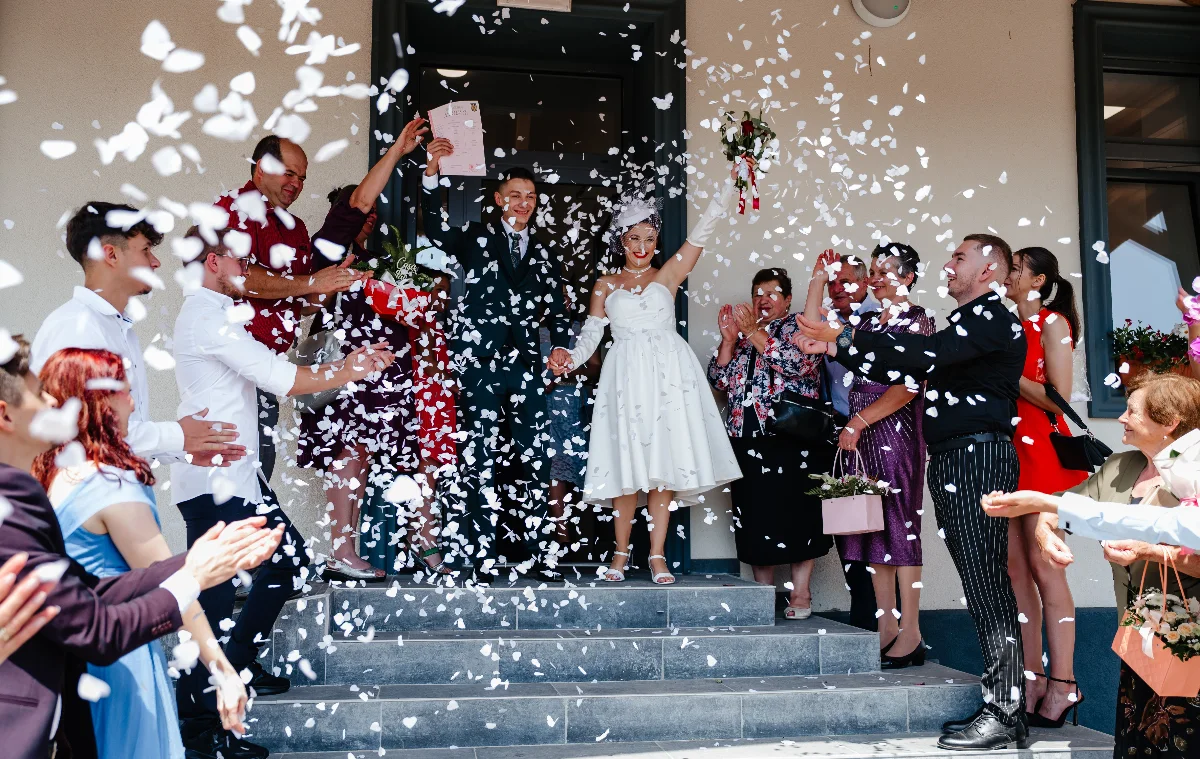
Your next conversation, in checklist form
Your next conversation, in checklist form
- Write the exact recessional order on a card for your officiant, including who exits with whom and the spacing between groups.
- Walk the recessional route with your wedding party at the rehearsal, timing how long each group takes to clear the aisle.
- Assign a designated person (usher, coordinator, or family member) to cue each row of guests to stand and exit.
- Decide whether you will have a receiving line and where it will form, then communicate that location to all participants.
- Confirm with your photographer where they will stand to capture the recessional without blocking the aisle.
- Plan a backup recessional route in case of weather if your ceremony is outdoors or has an uncovered exit path.
Wedding recessional order: common questions
Do we have to walk out in the same pairs we walked in?
No, you can change the pairings for the recessional to reflect who you want to exit together, such as pairing by friendship rather than by gender. Just make sure everyone knows their partner before the ceremony starts.
What if our ceremony space has only one narrow door?
Stagger the exits more slowly, with a longer pause between each pair or group, to prevent a bottleneck at the door. You may also consider having the wedding party exit through a side door if one is available.
Should we include a receiving line in the recessional order?
Only if you have enough space for guests to line up without blocking the exit or creating a traffic jam. If space is tight, hold the receiving line at the cocktail hour entrance instead.
Where to go next
Once your recessional order is set, decide your ceremony seating chart and then plan the processional order to mirror or contrast with the exit.